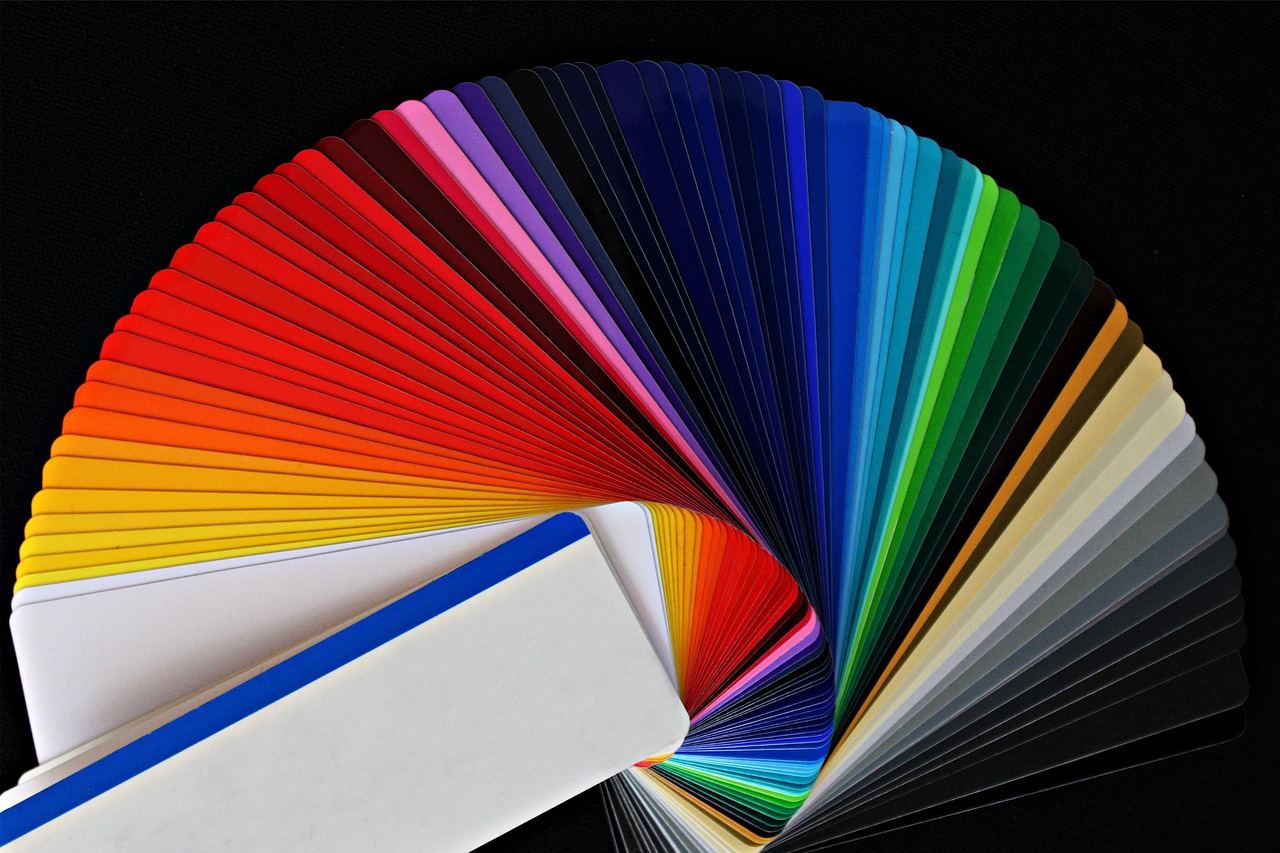

Wondering what the elements of design actually are? They are the building blocks every layout is made from: line, shape, form, color, value, space and texture. Learn each one and how they combine, and your work gets easier to plan.
Start here if you are working through our guide to graphic design basics and want the vocabulary first.
| Item | Value |
|---|---|
| Elements in the Berkeley guide | Seven (line, shape, form, color, value, space, texture) |
| Elements in the ASU list | Six terms (shape and form merged) |
| Shape | Two-dimensional: height and width |
| Form | Three-dimensional: height, width and depth |
| Space | Two kinds: negative and positive |
| Texture | Tactile or visual |
These figures come from the UC Berkeley Library design guide and ASU Learning Sparks. Definitions and lists can change as those pages are updated, so check the sources before you rely on them.
What are the elements of design?
According to ASU Learning Sparks, the elements of design are the building blocks that work together to form all of the objects around us. The UC Berkeley Library guide breaks them into seven: line, shape, form, color, value, space and texture.
If you search online, you will find lists that look different. ASU notes that these lists use variations of terminology to describe the same tools, and its own version uses six terms by treating shape and form together.
So do not worry about which list is the “right” one. Pick a list, learn its definitions and use it consistently with your team.
ASU also offers a helpful comparison: the elements are like words in a sentence, used in combination to accomplish the principles of design. You will see how that works in the section on combining them below.
Line, shape and form: the structure of a design
Line is a straight or curved mark that connects two points or is the path of a moving point, per the Berkeley guide. The same guide says lines vary in several ways:
- Weight, meaning how thick or thin the line is
- Direction, such as horizontal, vertical or diagonal
- Length, from a short tick to a line that crosses the whole layout
Lines do not have to be drawn to be seen. Berkeley points out that lines can also be implied, and in one of its examples these invisible lines show that a train is the subject of the illustration.
A shape is a two-dimensional enclosed area limited to height and width, and it can be geometric (hard edge) or organic (soft edge). ASU puts it more simply: shape is any line that encloses a space.
Form is a three-dimensional shape that exhibits height, width, and depth, according to Berkeley. In practice, a flat icon uses shape, while a product render with shading uses form.
Color and value: mood and contrast
Color is the perception of light reflected from the surface of a shape or form, as defined by the Berkeley guide. It describes three characteristics of color:
- Hue: the color family, such as red, green, yellow or blue
- Value: how light or dark the color is
- Intensity: how bright or dull the color is
Berkeley says complementary colors enhance each other, and they sit directly opposite each other on the color wheel. Analogous schemes use neighboring colors on the wheel and give a harmonious look and feel. For wheels, schemes and palette building, read our guide to color theory basics.
Value is the degree of lightness or darkness in a color. Berkeley adds that contrast of value separates objects in space, which is why dark text on a pale background reads so clearly.

Space and texture: room to breathe and surface feel
Space is the distances and areas around, between, and within components of a design. The Berkeley guide says there are two kinds of space: negative space that is not filled or occupied, and positive space that is occupied by a shape or form.
Berkeley notes that an abundance of space in an artwork can create a sense of stillness and serenity. Space can also create a visual illusion, because negative and positive space can swap places depending on where your eye focuses.
Texture is the surface quality of an object that we can sense through touch. It can be tactile or visual, per the same guide.
On a screen or a printed page, you will almost always work with visual texture. A photo of linen, a paper grain overlay or a soft shadow lets viewers imagine how a surface would feel without touching it.
How the elements work together
ASU says principles of design refer to how the elements are used. It lists them as follows, and you can read the full definitions there:
- Scale and proportion
- Repetition and variety
- Balance
- Emphasis
- Harmony or unity
Our guide to the principles of graphic design covers those ideas in more depth.
Take emphasis, which ASU describes as a strategy to draw the viewer’s attention to a specific aspect of a composition. You can build it from the elements above: a bold line, a high-contrast value, a pop of intense color or a patch of empty space around a headline.
Each element also pulls against the others. A busy texture can crowd out negative space, and a strong color can overpower a delicate line, so adjust one element at a time and look at what changes.
A simple way to practice
The Berkeley guide suggests that once you are familiar with each concept, you go back through the example images and apply some or all of the elements and principles. You can turn that into a short routine:
- Choose a finished design you admire.
- Name the element doing the most work, whether line, color, space or another.
- List the supporting elements and how they help or compete.
- Rebuild a rough version in your own layout, changing one element at a time.
- Ask where the eye lands first, and adjust until it lands where you want.
Frequently asked questions
Which elements make up the list?
Show answer
Think of them in groups: marks (line), areas (shape and form), appearance (color, value and texture) and the room around it all (space). The Berkeley guide uses these seven names.
Are elements and principles the same thing?
Show answer
No. Elements are the ingredients you work with, while principles describe the way those ingredients get arranged, according to ASU Learning Sparks.
Why do some sources show six elements and others seven?
Show answer
The gap comes from how narrowly each source defines its terms. ASU groups shape or form into a single item, while Berkeley keeps them apart, so both lists cover the same ground.
What is the difference between shape and form?
Show answer
Shape lives on a flat surface with only height and width. Form adds depth, so it describes things that occupy three-dimensional space, as defined by the Berkeley guide.
Do I need every element in every design?
Show answer
No. Berkeley cautions that its examples are not the only way an element can be put into practice, and it encourages you to think broadly and fluidly. Many strong layouts lean on just a few elements and let the rest stay quiet.